
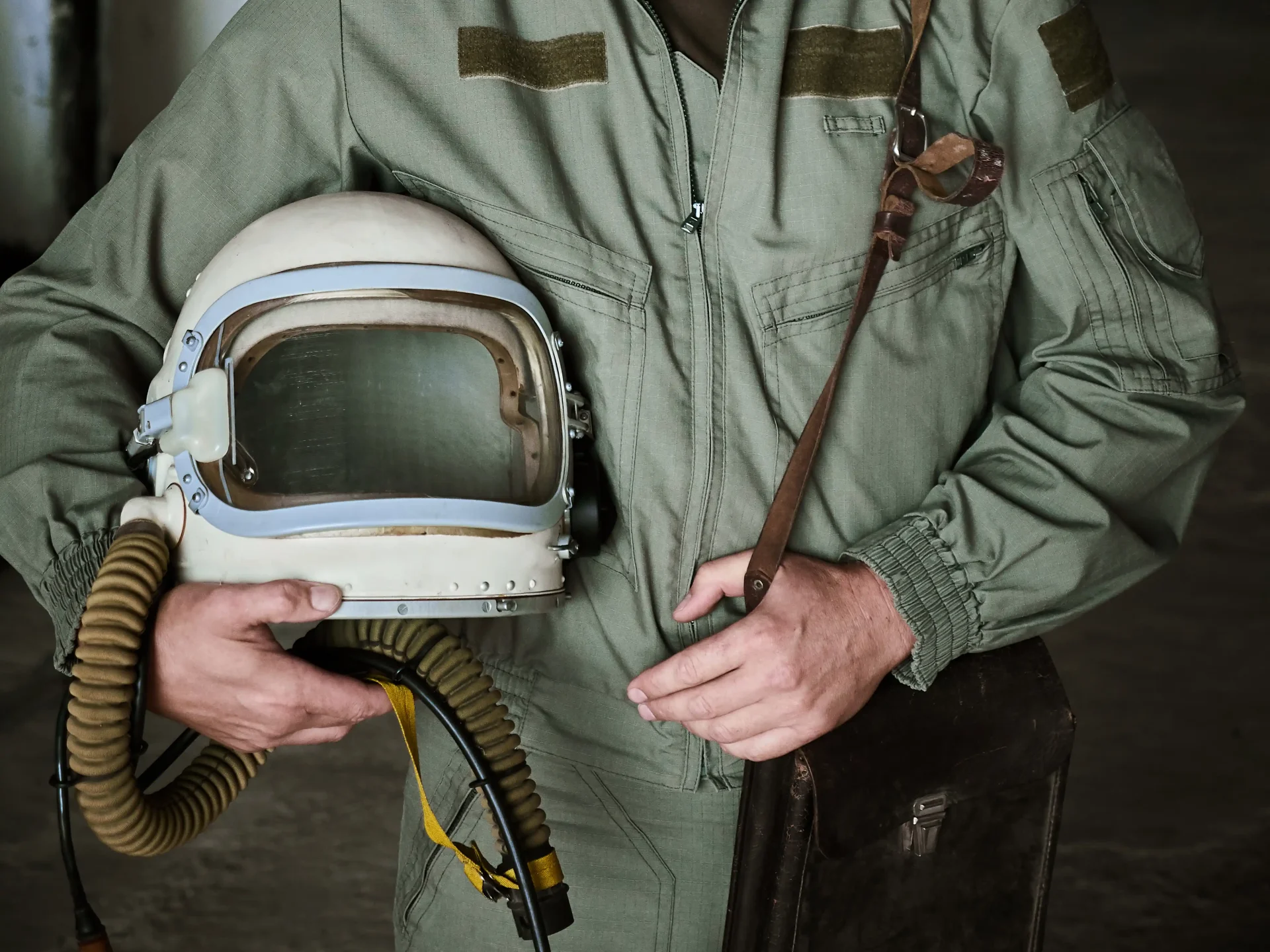
Your test scores and flight record got you in the door, but they will not win the slot on their own. A military guard reserve pilot interview is a unit-level evaluation of whether you fit the squadron as an officer, aviator, and teammate. It spans your packet, visit weekend, and formal board.
What Makes Guard and Reserve Pilot Selection Different from Other Military Interviews?
Guard and Reserve pilot slots are typically filled by the individual flying unit rather than through a centralized active-duty assignment process. The squadron is hiring a colleague it expects to fly, deploy, and drill alongside for years, and you are choosing that community as much as it is choosing you.
On active duty, officers compete service-wide and go where the Air Force needs them. Guard and Reserve units typically advertise their own pilot openings, screen their own applicants, and run their own boards. Selected candidates generally return to that same unit after UPT and follow-on training, often for a long career. Every question on the board carries a second one underneath it: do we want this person in the squadron for the next decade or longer?
Candidates who treat this like a corporate job interview or an OTS board underprepare in predictable ways. They rehearse their resume but not their reasons for choosing this unit, treat the visit weekend as a tour, and assume strong numbers will carry them.
Think of the reserve pilot selection process as three linked evaluations:
- The packet: your application, scores, letters, and flight records, which earn you an interview and shape the board’s first impression.
- The visit weekend: informal time with the unit, where pilots and staff form opinions about your character and fit.
- The formal board: a structured interview where those impressions are tested, confirmed, or overturned.
Each stage feeds the next. A strong board performance rarely rescues a poor visit, and a great visit weekend raises the stakes for how you perform in the room.
How Are Guard and Reserve Pilot Selection Boards Structured, and Who Is in the Room?
A Guard or Reserve pilot board is typically a seated panel of unit leadership and experienced pilots who question you directly, then deliberate and rank candidates. The format varies by unit, so confirm details with the unit recruiter or point of contact.
Many boards include some combination of the following:
- The squadron or group commander, or a designated representative from operations leadership
- Senior pilots and flight commanders who will supervise and instruct you
- Mid-level or recently qualified pilots who remember UPT and know what it takes to finish
- In some units, a full-time staff member, senior enlisted leader, or other unit representative
Some units ask every candidate the same structured question set. Others run a conversational board that follows your answers wherever they lead, and some open with standard questions before probing your packet.
Decision processes also vary by unit. In many units, board members assess or rank candidates individually, compare notes, and fold in feedback from the visit weekend. Leadership makes the final selection, and selected candidates typically move into commissioning (if not already commissioned) and the formal training pipeline.
Expect every person in the room to have a vote or a voice, and expect some of them to have met you already. Keep your answers consistent with what you said at the bar, in the ops desk hallway, and in your packet. If you told a flight commander during the visit that you would be happy in any airframe, don’t tell the board you have only ever wanted fighters.
What Do Selection Boards Evaluate Beyond Your Grades and Test Scores?
Beyond your numbers, boards commonly look for composure, clear communication, judgment, humility, teamwork, commitment to the unit, and coachability. Your AFOQT, TBAS, and PCSM results qualify you for consideration. Once applicants clear the unit’s screening, the board is often choosing among people with competitive scores, solid academics, and some flight time, so the traits below usually separate them. The board has stopped asking “Can this person pass UPT?” and started asking “Is this the person we want representing our squadron?”
- Composure under pressure: Do you stay steady when a board member challenges your answer? If you say you would report a classmate who broke a training rule, expect a follow-up like “Even if it ends their training?” and answer it without backpedaling.
- Clear, concise communication: Aviation runs on brevity. Rambling answers signal how you will sound on the radio and in a debrief.
- Judgment and integrity: How do you reason through ethical gray areas, and do you own mistakes without deflecting?
- Followership and humility: New lieutenants spend years learning. Boards want confidence without arrogance and someone who takes feedback well.
- Teamwork and crew mindset: Every platform relies on crews, formations, or cross-functional teams. Boards listen for “we” when it belongs and “I” when you are accountable.
- Commitment to the unit: Can you describe the unit’s mission, the drill obligation, and what service in this community requires of you and your family?
- Coachability: Can you absorb instruction, adjust quickly, and avoid repeating errors?
An informal filter, sometimes called the “trip test,” sums up the fit question: would I want to spend a long deployment, a cross-country, or a stalled week TDY with this person? You can’t fake your way through that filter, but you can keep nerves and poor preparation from hiding who you are.
For a broader look at how military selection boards weigh officer traits, see this guide to military officer interview preparation.
Communicating under scrutiny is a trainable skill. Rehearsing out loud, getting feedback, and refining your delivery helps you present more clearly than relying on instinct alone.
How Do You Present Your Military Pilot Application Packet in the Interview Room?
Know every line of your military pilot application packet well enough to discuss it confidently, including the weak spots. Board members often pull questions straight from your resume, transcripts, letters, and scores, and they notice when a candidate seems surprised by their own record.
Before the board, reread your packet as a skeptical evaluator would. Flag anything that raises an obvious question, such as a low semester, a gap in employment, a retaken score, a career change, or a short tenure somewhere. Then prepare a short, honest explanation for each.
How to Address Gaps and Low Scores
Use a four-part structure:
- Acknowledge the fact plainly, without minimizing it.
- Give brief context in one or two sentences, not a long justification.
- Show what you did about it and what changed.
- Pivot to current evidence of the trait in question.
Imagine a candidate with a weak freshman year. A strong answer admits the poor habits, names the specific change they made, points to the improved record that followed, and connects that turnaround to how they will handle the academic load at UPT. The board hears maturity instead of excuses.
Non-Traditional and Prior-Service Paths
Career changers, older applicants, and prior enlisted members often bring leadership, operational exposure, and proven reliability. The challenge is translation: boards want to hear how your background prepares you for the cockpit and for life as a junior officer, beyond your job title. Eligibility rules for non-traditional applicants vary, so confirm them with the unit recruiter and official service sources. If you are coming from enlisted service, this guide on how to translate your military experience for interviewers is a useful starting point.
Explaining Your Platform Interest
Many candidates apply to a unit because of the aircraft it flies. That’s legitimate, but “I’ve always wanted to fly fighters” is not an answer. Tie your interest to the mission and the community:
- Fighter (F-15, F-16): single-seat or small-crew demands, air-to-air or air-to-ground missions, intense upgrade programs, and a culture of rigorous debriefing
- Tanker (KC-135): global mobility, crew coordination, enabling every other mission, and long-duration operations
- Airlift (C-17, C-130): cargo, personnel, airdrop, and humanitarian missions, plus crew leadership and austere operations
- Tiltrotor (V-22): a distinct blend of rotary and fixed-wing flight and specialized missions that require adaptability
Confirm which aircraft a unit operates through the unit itself or official service sources before you speak to it. Then be ready to explain why that mission fits you and what you already know about it.
What Are the Most Common Guard Pilot Interview Questions, and How Should You Structure Your Answers?
Most guard pilot interview questions fall into six categories: motivation and unit fit, leadership and behavioral examples, aviation knowledge, judgment and integrity, commitment and logistics, and your questions for the board. Each category rewards a specific answer structure.
The samples below are example question types for practice, not official or leaked board questions. For a deeper question bank, see the breakdown of military pilot interview questions selection boards really ask.
Motivation and Unit Fit
- Why do you want to fly for this unit specifically?
- Why the Guard or Reserve instead of active duty?
- Tell us about yourself.
Structure: Open with a clear one-sentence answer, support it with two specific reasons tied to the unit’s mission and community, and close with what you will contribute. To test for generic lines, swap another unit’s name into your answer. If it still works, rewrite it.
Leadership and Behavioral Examples
- Tell us about a time you led a team through a difficult situation.
- Describe a time you failed. What did you learn?
- Tell us about a conflict with a peer or supervisor.
Structure: Use the STAR method (Situation, Task, Action, Result), keeping the situation brief and the action detailed. Finish with a reflection that shows growth. Honest failure stories land better than polished victory laps. For a full walkthrough of the STAR method, see how to structure your interview answers.
Aviation Knowledge and Platform Awareness
- What do you know about our mission?
- Walk us through your flight training so far.
- What challenges do you expect at UPT?
Structure: Answer accurately and briefly, then connect what you know to how you are preparing. If you don’t know something, say so and explain how you would find out. Bluffing in an Air National Guard pilot interview is one of the fastest ways to lose credibility.
Judgment and Integrity Scenarios
- A fellow student pilot confides they broke a training rule. What do you do?
- You are asked to do something you believe is unsafe. How do you respond?
Structure: State your decision, explain the reasoning (safety, integrity, chain of command), acknowledge the competing loyalties, and describe how you would act respectfully. Keep it principled and short; a speech about your values reads as grandstanding.
Commitment and Life Logistics
- How will you balance civilian employment, family, and your drill obligations?
- What does your support system think of this commitment?
Structure: Be realistic and specific. Show that you have discussed the commitment with the people it affects and have a plan for the long training timeline.
Your Questions for the Board
Prepare two or three thoughtful questions about the unit’s culture, upgrade path, or mission. Skip anything you should have learned during the visit weekend.
One of the most practical pilot board interview tips is to rehearse these structures out loud until they feel natural.
What Happens During the Unit Visit Weekend, and Why Does It Matter?
The unit visit, often scheduled around a drill weekend, is typically an informal but extended evaluation where pilots and staff get to know you before the board. Many candidates underestimate it, yet the impressions formed here often shape the board’s opinion before you sit down.
During a visit, you will commonly meet squadron pilots, observe briefs or daily operations, tour facilities, and attend social events. Some units formally collect feedback from members who met you, while others rely on informal conversation. Either way, assume people are paying attention.
How you treat maintainers, the front desk, administrative staff, and junior members matters as much as how you interact with senior pilots. Units notice candidates who turn on the charm only for people with rank.
To prepare for the visit:
- Research the unit’s mission, history, and aircraft using the unit and official sources such as GoANG or Air Force Reserve
- Bring questions the unit’s website doesn’t answer
- Dress conservatively and professionally, and ask your point of contact about expectations for each event
- Learn and use names, and follow up with a brief, specific thank-you afterward
- Keep social events social but disciplined, and keep alcohol to a minimum or skip it
For guidance on what to wear and how to present yourself during a professional visit, see what to wear to a professional interview for any industry.
Let the unit see a mature, curious, reliable person they can picture in the squadron. Treat the visit as the first half of your interview, because in practice it often is.
What Mistakes Cost Candidates a UPT Slot?
The costliest mistakes are usually avoidable: weak preparation on unit fit, inconsistent answers, arrogance, and poor conduct during the visit weekend. Any of these can sink an applicant whose scores and credentials are otherwise competitive, so learning how to get a UPT slot starts with learning how candidates lose one.
Watch for these common errors:
- Generic motivation: answers that would work for any unit signal a candidate applying everywhere without real interest.
- Arrogance about the airframe: fixating on the jet while ignoring the mission and the people.
- Rambling: long, unfocused answers suggest poor communication discipline.
- Blaming others: deflecting responsibility for low scores or past failures.
- Bluffing technical knowledge: guessing instead of admitting what you don’t know.
- Inconsistency: telling the board something different from what you said at the visit.
- Poor visit conduct: overdrinking, name-dropping, or ignoring enlisted members and staff.
- Neglecting logistics: failing to show a realistic plan for balancing training, work, and family.
- No questions for the board: signaling limited curiosity about the unit.
Reapplication policies and timelines vary by unit, so confirm them with the unit recruiter rather than assuming you will get another attempt soon.
How Does Mock Interview Practice Prepare You for an Air Force Reserve Pilot Board?
Mock boards simulate the pressure, format, and follow-up questioning of a real Air Force Reserve pilot board or Guard board, so you build composure and precision before the stakes are real. Rehearsing out loud with feedback typically produces tighter, more confident answers than preparing only in your head.
Knowing what to say and saying it well under scrutiny are different skills. A mock board exposes filler words, weak stories, and gaps in reasoning you won’t catch on your own. It also lets you practice recovering from a tough follow-up, which is often where boards learn the most about you.
Professional Interview Prep’s Military Guard/Reserve Pilot Interview Prep course is built specifically for UPT selection board preparation and covers the F-15, F-16, KC-135, C-17, C-130, and V-22 platforms. It follows the same structured method used across all courses:
- Academics: learn how boards evaluate candidates and the interview techniques and principles behind strong answers.
- Group Training: practice core questions and observe how other candidates approach them.
- Small Group Training: refine answers with closer feedback and more speaking time.
- One-on-One Mock Interview: face a simulated board and receive direct, actionable feedback.
Access to this military aviation interview prep course is unlimited until hired, which gives reassurance to candidates who face multiple board cycles. Course pricing varies; check current pricing directly with Professional Interview Prep. The company brings two decades of interview coaching experience and has helped more than 20,000 clients across medical and veterinary school, military aviation, flight attendant, IT, postgraduate, and corporate interviews. That range reinforces a simple point: interview performance is a trainable skill in every high-stakes field. As an independent coaching company, Professional Interview Prep is not affiliated with or endorsed by the U.S. Air Force, Air National Guard, Air Force Reserve, or any unit, and no coaching can guarantee selection.
Your next step: reread your packet as a skeptical board member would, list every question it raises, and practice answering each one out loud before your visit weekend. To do that practice in front of a mock board, get started with the Military Guard/Reserve Pilot Interview Prep course at Professional Interview Prep or call (866) 522-7737.
Frequently Asked Questions
What questions are asked in a Guard or Reserve pilot selection board?
Most boards ask about why you want this specific unit and why you chose the Guard or Reserve over active duty. Expect leadership and failure stories, questions about the unit’s mission, ethical scenarios, and how you will balance drill, work, and family. Many panels also pull questions directly from your packet, so be ready to discuss anything on your resume, transcripts, or letters. Follow-up questions often matter more than the opening question, because board members use them to test whether your answer holds up under pressure.
How do I prepare my application packet for a Guard or Reserve pilot board?
Start by confirming exactly what the unit requires with its recruiter or point of contact. Packets commonly include a resume, test scores, transcripts, letters of recommendation, and flight records. Choose recommenders who know you well enough to speak to your character, judgment, and reliability, rather than people with impressive titles who barely know you. Proofread every document and make sure dates, flight hours, and details match across all of them. Once you submit, study the packet as your own interview script, since the board will likely treat it that way.
What do Guard and Reserve units look for in pilot candidates beyond test scores?
Units want a teammate they can trust in the squadron for the long haul. That means someone composed, honest, coachable, and clear-spoken who does not need to be the center of attention. They also look for proof that you understand the real commitment, including drill obligations, the lengthy training pipeline, and the impact on your family and civilian career. Genuine interest in the unit’s mission and people carries weight, while fixation on a particular jet tends to hurt you.
How is a Guard pilot interview different from an active duty pilot selection process?
Active duty pilot selection is centralized and service-wide. Candidates compete for pilot training and are then assigned wherever the service needs them. In the Guard and Reserve, the individual flying unit usually advertises the opening, runs the board, and picks a candidate it expects to return and serve alongside for many years. That makes fit with one specific squadron a central question rather than a secondary one. It also means the evaluation often extends beyond the formal interview to include time spent with the unit before the board.
How many times can you apply for a Guard or Reserve UPT slot?
There is no single universal limit. Each unit sets its own hiring timeline, and many candidates apply to several units or return to the same unit in a later cycle. The practical limits usually come from eligibility rules, such as age cutoffs for entering pilot training, which you should verify with the unit recruiter and official service sources. If you are not selected, respectfully ask for feedback and strengthen your packet with more flight time, better scores, or new leadership experience. A reapplication that shows clear growth is usually received better than an identical second attempt.
Should I visit the unit before my pilot board interview?
Yes, whenever the unit offers or allows a visit, because many units treat it as a meaningful part of the evaluation. Visiting lets pilots and staff get to know you, and it gives you the specifics you need to answer “why this unit?” without generic praise. It also helps you decide whether this community is where you want to spend a long career. Coordinate through the unit’s point of contact rather than showing up unannounced, and treat every interaction during the visit as part of your interview.
Does interview coaching actually help for military aviation selection boards?
Coaching helps most when it involves realistic practice out loud with honest feedback. Delivery, brevity, and composure under follow-up questions are hard to judge on your own. A good mock board can expose rambling answers, weak stories, filler words, and inconsistencies before a real panel does. Coaching cannot replace genuine motivation, a solid record, or real knowledge of the unit, and no provider can guarantee selection.