
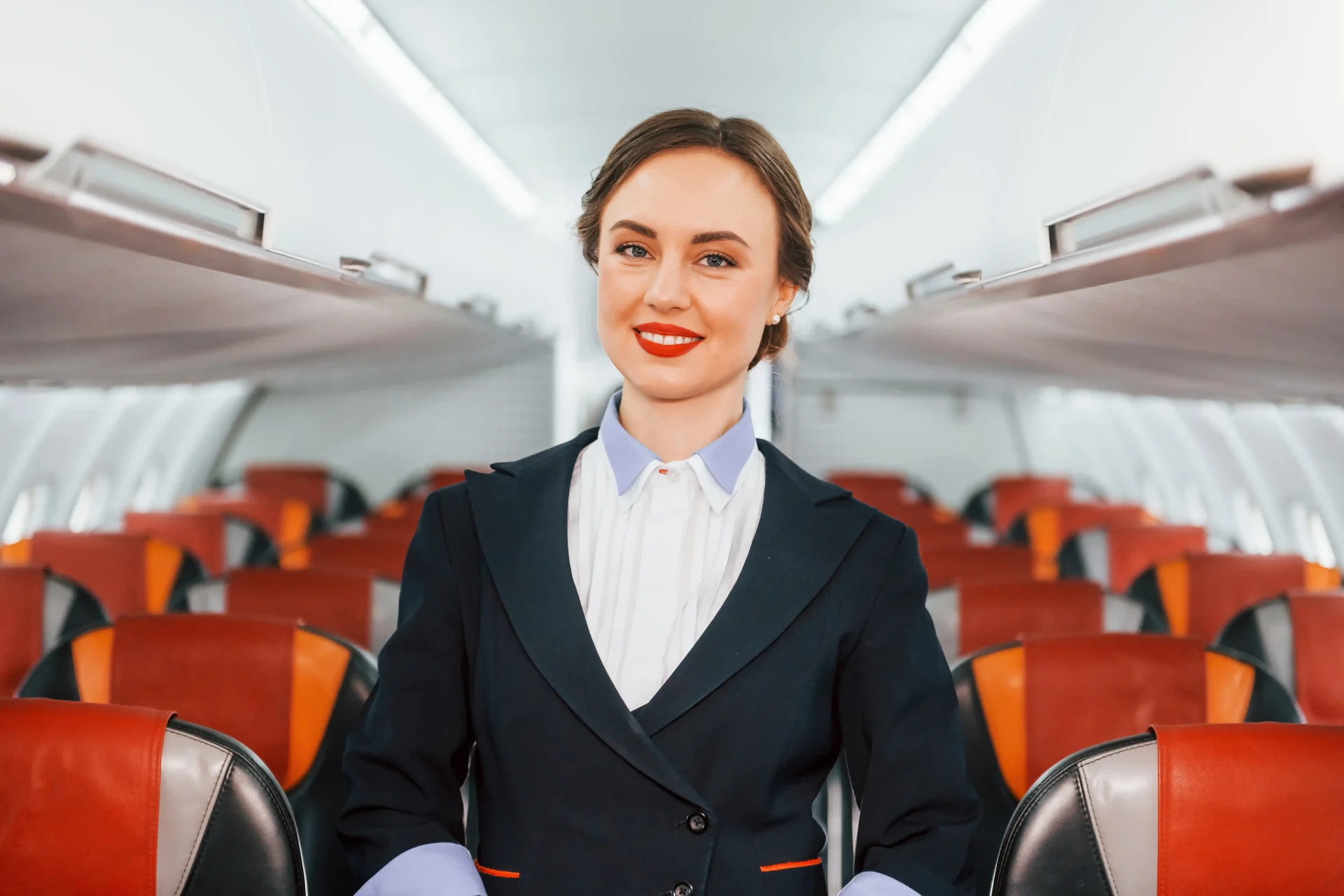
Strong candidates with real customer service experience get cut at the group interview stage every hiring cycle, not because they lack qualifications, but because they misread what the room is testing. You cleared the initial screening, and now you face an assessment day where recruiters watch how you engage alongside a room full of competitors. The flight attendant group interview is a structured evaluation where recruiters observe how you communicate, collaborate, and stay composed under pressure, not just whether you give correct answers. To advance past this stage, you need to understand what evaluators typically look for and how to demonstrate it, which is what our flight attendant interview preparation guide breaks down in detail.
What Does the Group Interview Stage Actually Measure?
The group interview stage measures interpersonal behavior in real time: how you interact with strangers, whether you stay calm under observation, and how naturally you fit a crew dynamic. It is not a formality, and it is not primarily about your answers.
Cabin crew work is inherently collaborative. A flight attendant spends every shift coordinating with people they may have met an hour earlier, managing passengers, and staying poised during disruptions. Recruiters cannot measure that from a resume, so they build a live environment to watch it happen.
During a flight attendant assessment day, evaluators typically track behavioral patterns across the whole session. They note who listens, who interrupts, who supports a struggling peer, and who fades into the background. These are the same behavioral signals that high-stakes evaluators tend to look for across fields, whether the selection process is for medical school, a military pilot slot, or an airline cabin crew role.
Over two decades of interview coaching and more than 20,000 clients helped across competitive professional fields, our coaches have observed one consistent pattern: strong candidates get cut at the group stage because they misread what the format is testing. Group interview performance is observable, structured, and coachable. You can train for it once you understand what recruiters typically watch for. That coachability is the point, because these behaviors are authentic and trainable rather than something to fake.
What Formats Do Airlines Use in Group Assessment Days?
Airlines use several distinct group activity formats during assessment days, including group discussions, collaborative problem-solving tasks, role-play scenarios, and observed question-and-answer panels. Knowing the likely structure in advance keeps you calm when the exercise begins.
Most carriers rotate through a mix rather than relying on a single activity. Here are the formats you are most likely to encounter, and these airline group interview tips apply across each:
- Group discussion: Recruiters give the group a topic or prompt and observe how each candidate contributes to an unstructured conversation. They watch turn-taking, listening, and whether you build on others rather than talking over them.
- Collaborative problem-solving: The group receives a task, often a scenario with limited time or resources, and must reach a shared decision. Evaluators observe how you help the group move forward without steamrolling it. These flight attendant group activity tips reward candidates who advance the team.
- Role-play scenarios: You act out a customer service situation, sometimes a difficult passenger interaction. These surface how you handle conflict, stay warm under pressure, and represent the airline as a brand ambassador.
- Observed Q&A panels: Recruiters ask questions to the group or to individuals while the rest of the room watches. Your composure while waiting and listening matters as much as your spoken answer.
In most assessment formats, no single exercise decides your outcome. Recruiters typically build a composite picture across every activity. A single strong moment will not save an otherwise inconsistent day, and one nervous stumble rarely eliminates a candidate who performs steadily everywhere else.
Candidates who advance treat the entire day as one continuous evaluation. That mindset, more than any specific tactic, separates prepared applicants from those who arrive cold.
How Do You Contribute Without Dominating the Group?
Recruiters typically watch for calibrated contribution: candidates who speak up with substance while actively supporting others. Both the person who dominates and the person who stays silent raise concerns, because neither behavior fits how a crew actually functions. Learning how to stand out in a flight attendant interview starts here.
This is one of the most misunderstood parts of the airline cabin crew interview. Many candidates assume the loudest, most assertive person wins. In practice, over-talkers signal that they will not listen to a purser or a fellow crew member during a real cabin situation. Silent participants signal disengagement or an inability to hold their own with passengers.
The behavior recruiters tend to reward sits in the middle. You want to demonstrate that you can:
- Contribute a clear, relevant point without repeating what has already been said
- Invite quieter participants into the conversation with a genuine question
- Build on someone else’s idea instead of competing with it
- Disagree respectfully and briefly when the group is heading off track
- Help the group land on a decision when time is running short
Calibration is exactly the kind of behavioral blind spot that self-preparation and friend feedback tend to miss. Most people cannot accurately judge whether they come across as dominant or passive in a group, because they experience the interaction from the inside. An external coach watching your behavior in a simulated group can name the pattern you cannot see.
The comparative perspective matters here. Our coaches have watched these dynamics play out across veterinary, medical, military, and flight attendant selection processes, and that cross-industry vantage point is consistent. Evaluators across high-stakes fields tend to reward candidates who elevate the group rather than dominate it.
How Much Does Non-Verbal Communication Matter During the Group Stage?
Recruiters observe your non-verbal communication continuously, including body language, facial expressions, energy, and grooming, from the moment you arrive until the moment you leave. Group interview body language often carries as much weight as the words you speak.
Cabin crew are the face of the airline. A recruiter is essentially asking a simple question: would I feel confident putting this person in front of paying passengers? That judgment forms partly from what they see before you say a word.
Pay attention to these observable signals throughout the day:
- Posture and openness: Sit and stand tall, keep your arms uncrossed, and orient your body toward whoever is speaking.
- Facial engagement: A warm, natural expression and genuine eye contact signal the customer service warmth airlines depend on.
- Energy consistency: Recruiters notice candidates who bring bright energy when addressed but slump or check out during transitions and waiting periods.
- Grooming and presentation: Many airlines evaluate whether you can meet uniform and appearance standards, so polished, professional presentation is part of the assessment.
Many candidates miss the fact that you are being observed during the unstructured moments too. How you treat other candidates in the waiting area, whether you chat kindly with a nervous applicant, and how you carry yourself between activities all register. The U.S. Bureau of Labor Statistics lists strong communication and customer service skills as core qualities airlines require of flight attendants, and recruiters look for those qualities in every interaction, not only during the formal exercises.
Consistency is the goal. A candidate who stays warm, alert, and professional across the entire assessment day reads as authentic, because that steadiness is genuine rather than performed. This is what airlines look for in flight attendants: real warmth that holds up under a full day of observation.
What Behaviors Get Candidates Eliminated Before the One-on-One Interview?
The behaviors that most often eliminate candidates at the group stage are concrete and coachable: interrupting, disengaging, criticizing peers, and losing composure. These are actions, not personality traits, which means you can identify and correct them before assessment day.
Recruiters typically spot disqualifying patterns quickly because assessment days move fast. Here are the behaviors that consistently cut candidates before they reach the individual round:
- Dominating the group. Talking over others or steering every activity signals you will not defer to crew authority.
- Disappearing into silence. Contributing nothing suggests you cannot hold your own with passengers or teammates.
- Criticizing or dismissing peers. Cutting down another candidate’s idea, even subtly, tells recruiters you would create friction in a cabin.
- Losing composure. Visible frustration, defensiveness, or panic when an activity gets stressful is a serious concern for a safety-critical role.
- Inconsistent energy. Being engaged when watched and checked out when you think no one is looking reveals a performance rather than a temperament.
- Weak listening. Repeating a point someone already made, or missing instructions, signals you do not track information under pressure.
Every one of these is trainable. Many applicants who get cut have genuinely strong qualifications and real customer service experience, but they never practiced the specific observable behaviors a group assessment is designed to surface. That gap is exactly what targeted preparation closes.
If your strongest exercises involve telling structured stories, learning to frame those responses cleanly matters too. Our guide to behavioral interview questions and answers walks through how to structure examples so you sound clear and credible when a recruiter asks you to describe a real customer situation.
How Do You Prepare for the Flight Attendant Group Interview Specifically?
Preparing for the group stage means practicing observable group behaviors, not memorizing answers. The skills that matter, calibrated contribution, composure, and consistent presentation, are all trainable before assessment day. Good flight attendant interview preparation targets those specific behaviors.
Generic advice like “smile and be confident” fails here because it gives you nothing concrete to practice. A serious approach to the flight attendant hiring process targets the specific behaviors recruiters score. Build your preparation around these steps:
- Simulate the formats. Practice group discussions and collaborative tasks with other people, ideally strangers, so you rehearse the actual dynamic rather than talking to a mirror.
- Record and review yourself. Watch your body language and listen to how often you speak versus listen. Recording surfaces habits you cannot feel in the moment.
- Self-assess your contribution ratio. Aim to speak with substance while actively drawing others in. If you notice you dominate or vanish, adjust deliberately.
- Rehearse composure under stress. Practice staying warm and steady when an exercise gets tense or a role-play throws you an unhappy passenger.
- Prepare your presentation. Confirm your grooming, attire, and energy meet the professional standard airlines expect throughout a long assessment day.
The single most valuable step is working with someone who can observe you and name your blind spots. Communication is a skill set that develops with practice, and most candidates cannot see their own patterns clearly. Friends tend to be too kind, and self-review misses what a trained eye catches.
A structured mock interview and coaching session gives you exactly that: real-time observation and immediate, actionable feedback grounded in how evaluators across high-stakes fields assess candidates. That comparative, cross-industry perspective is what generic career sites and forums cannot offer. The Association of Flight Attendants also provides useful background on the profession and the standards the role demands.
Contact Professional Interview Prep at (866) 522-7737 or online to learn more about preparing for your assessment day with a coach who has watched thousands of candidates work through group selection.
How Do You Carry Momentum from the Group Stage into the Individual Interview?
To carry momentum into the one-on-one, maintain the same energy, warmth, and composure you showed in the group rather than visibly resetting. Recruiters often compare your two performances directly, and any drop reads as inconsistency.
A common mistake is treating the individual interview as a fresh start. Candidates who were bright and engaged in the group sometimes arrive at the panel drained or newly nervous, and that contrast reads as if the group performance was an act. Consistency confirms your behavior was authentic all along.
Keep these transitions smooth by focusing on three things:
- Energy continuity: Carry the same warmth and alertness into the room. Do not let the shift in format flatten your presence.
- Story readiness: Have your customer service and teamwork examples prepared so you can answer behavioral questions cleanly and specifically.
- Composure under one-on-one pressure: The individual round often digs deeper, so practice staying steady when questions get pointed.
The individual interview rewards depth, structure, and calm confidence. Preparing for that round with the same rigor you brought to the group stage turns years of effort into a real opportunity. Our resources on the flight attendant interview from industry insiders go deeper on the one-on-one and panel rounds specifically.
Group interview performance is not luck, and it is not about faking a personality. It is a structured, observable skill set you can train, which is why we treat it as a learnable and coachable discipline. Contact Professional Interview Prep at (866) 522-7737 or reach out online to learn how our coaches help serious candidates prepare for every stage of the flight attendant hiring process.
Frequently Asked Questions
What happens at a flight attendant group interview?
At a flight attendant group interview, you join a room of other candidates and move through a series of structured activities while recruiters observe your behavior. These typically include group discussions, collaborative problem-solving tasks, role-play scenarios, and observed question-and-answer panels. Rather than testing whether your answers are correct, the format is designed to reveal how you communicate, collaborate, and stay composed alongside strangers. Recruiters watch the entire session, including the unstructured moments between exercises, to build a complete picture of how you would function as part of a crew.
What are airlines looking for during the group assessment day?
Airlines are looking for interpersonal behavior that mirrors real cabin crew work: warmth, composure, collaboration, and the ability to fit naturally into a team of people you just met. They want candidates who contribute meaningfully without dominating and who support others rather than compete with them. Because flight attendants are the face of the airline, recruiters also assess whether you present the professional warmth and polish passengers expect. Above all, they want authentic behavior that holds up consistently across a long day of observation.
How do I stand out in a flight attendant group interview without being too aggressive?
You stand out by contributing calibrated substance while actively lifting the group rather than overpowering it. Share clear, relevant points without repeating what has already been said, and invite quieter participants into the conversation with genuine questions. Build on others’ ideas, disagree respectfully when the group drifts off track, and help the team reach a decision when time is short. Recruiters reward candidates who elevate the group, so your goal is to be memorable for collaboration, not volume.
What do flight attendant recruiters observe during group activities?
Recruiters observe behavioral patterns in real time, tracking who listens, who interrupts, who supports a struggling peer, and who fades into the background. They pay close attention to turn-taking, how you build on others’ contributions, and whether you steamroll the group or move it forward. Non-verbal signals matter continuously, including posture, facial engagement, energy consistency, and grooming. They also watch the unstructured moments, such as how you treat other candidates in the waiting area, because those interactions reveal your genuine temperament.
What behaviors get candidates eliminated at the group interview stage?
The most common eliminating behaviors are interrupting or dominating the group, disappearing into silence, criticizing or dismissing peers, and losing composure when an activity gets stressful. Inconsistent energy, being engaged when watched but checked out otherwise, signals a performance rather than a genuine temperament. Weak listening, such as repeating a point someone already made or missing instructions, suggests you cannot track information under pressure. These are concrete actions rather than fixed personality traits, which means you can identify and correct them with targeted practice before assessment day.
How should I specifically prepare for the flight attendant group interview?
Prepare by practicing observable group behaviors rather than memorizing answers, since generic advice like “smile and be confident” gives you nothing concrete to work on. Simulate the actual formats with other people, ideally strangers, and record yourself to review your body language and your speaking-versus-listening ratio. Rehearse staying warm and steady when an exercise gets tense, and confirm your grooming, attire, and energy meet professional standards for a full day. The most valuable step is working with a coach who can observe you and name the blind spots that friends and self-review typically miss.
Does body language matter during the flight attendant group assessment?
Yes, body language matters significantly and is observed continuously from the moment you arrive until you leave. Recruiters watch your posture, facial expressions, eye contact, energy level, and grooming to judge whether they would feel confident placing you in front of paying passengers. Openness, a warm and natural expression, and genuine engagement signal the customer service quality airlines depend on. Consistency is key, because candidates who stay alert and warm even during waiting periods and transitions read as authentic rather than performing for an audience.